Marathons in Spain: choose a race and plan your goal
Spain offers a wide range of city marathons, but the fastest-looking course is not automatically the right race for you. Compare the route, travel, likely conditions and the time you have to train. This guide focuses on Seville and Valencia and gives you a practical framework for preparing a personal best.
Before entering, check the current edition’s official information. A route, start area or aid station plan can change from one year to the next. Consider these questions:
- Does the course profile suit your strengths and target pace?
- Will the race date allow a complete training block and sensible recovery?
- Can you arrange travel and accommodation without adding stress on race morning?
- Where will you collect your bib, enter your start wave and meet supporters after the finish?
Two popular options for a fast marathon
Seville Marathon
Seville’s flat course is a popular choice for runners pursuing a time goal. For the 2027 edition, the organiser lists the start on Avenida de María Luisa and the finish on Paseo de las Delicias. Check the official race information before planning your arrival; the start and finish are separate places.
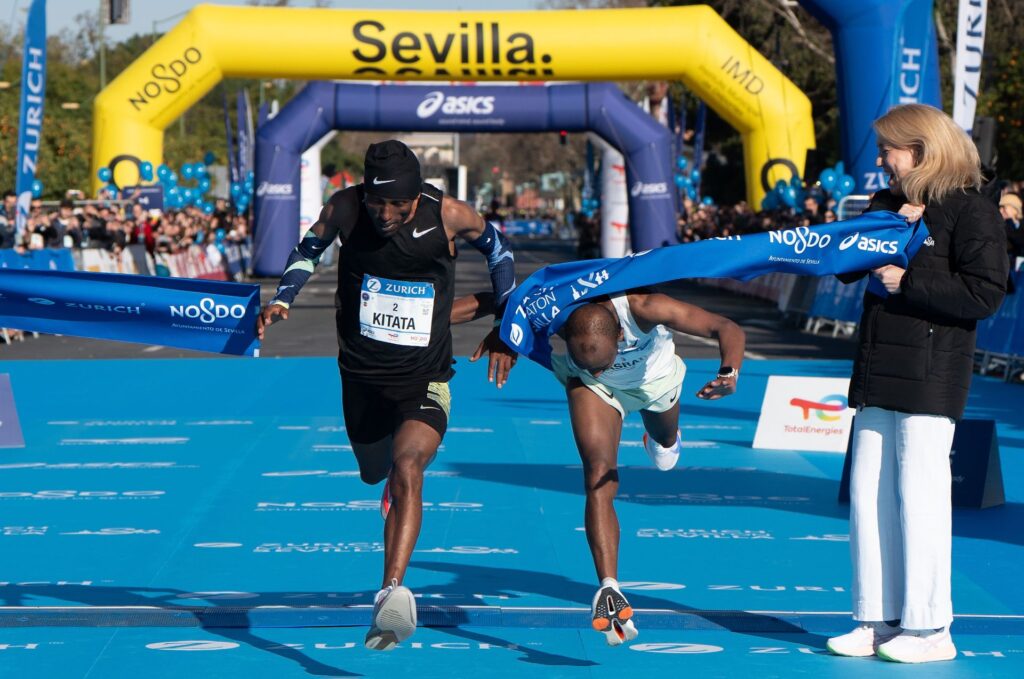
Our Seville Marathon guide (in Spanish) covers pacing, travel and the course in more detail. Its English version will be linked here when available.
Valencia Marathon
Valencia is another option for runners who prefer a flat course. Its finish at the City of Arts and Sciences is a distinctive feature. Review the official course map for the edition you plan to run and assess transport to the start, aid stations and the final kilometres.
Read our Valencia Marathon guide (in Spanish) for a closer look at the race. Barcelona, Madrid and other Spanish marathons can also be good choices, depending on the date and course profile. Compare each organiser’s current details instead of relying on a generic difficulty rating.
Build a race plan you can practise
A personal best depends on preparation and execution, not just the elevation chart. Start from your current fitness and available weeks. Include easy running, long runs, appropriate faster sessions and recovery. Increase training gradually and adjust if fatigue accumulates rather than forcing every planned workout.
- Pace: Set a realistic target from recent training or races. Practise holding it during longer sessions and avoid starting much faster because the opening kilometres feel easy.
- Fuel and fluids: Rehearse your gels, drinks and timing on long runs. Your plan should match what you tolerate and the aid available on the course.
- Shoes: Race in a model you have already tested at training pace. A new shoe on race day is an unnecessary gamble.
- Conditions: Check the forecast close to the event and be ready to adjust pace and hydration.
Race weekend logistics
Book accommodation with the start, public transport and bib collection in mind. Read the runner’s guide when the organiser publishes it; check bag drop, wave access and cut-off times. Lay out your kit and breakfast plan the night before, and leave time for unexpected transport delays. Arrange a meeting point after the finish, especially if the course ends somewhere different from its start.
Review your training with IronBuddy
Looking at the consistency, pace and load of your sessions can help you judge whether your marathon goal is realistic. Start with IronBuddy for free and compare the plans and pricing. PRO is €19.99 as a one-time payment; check the included features before choosing it.