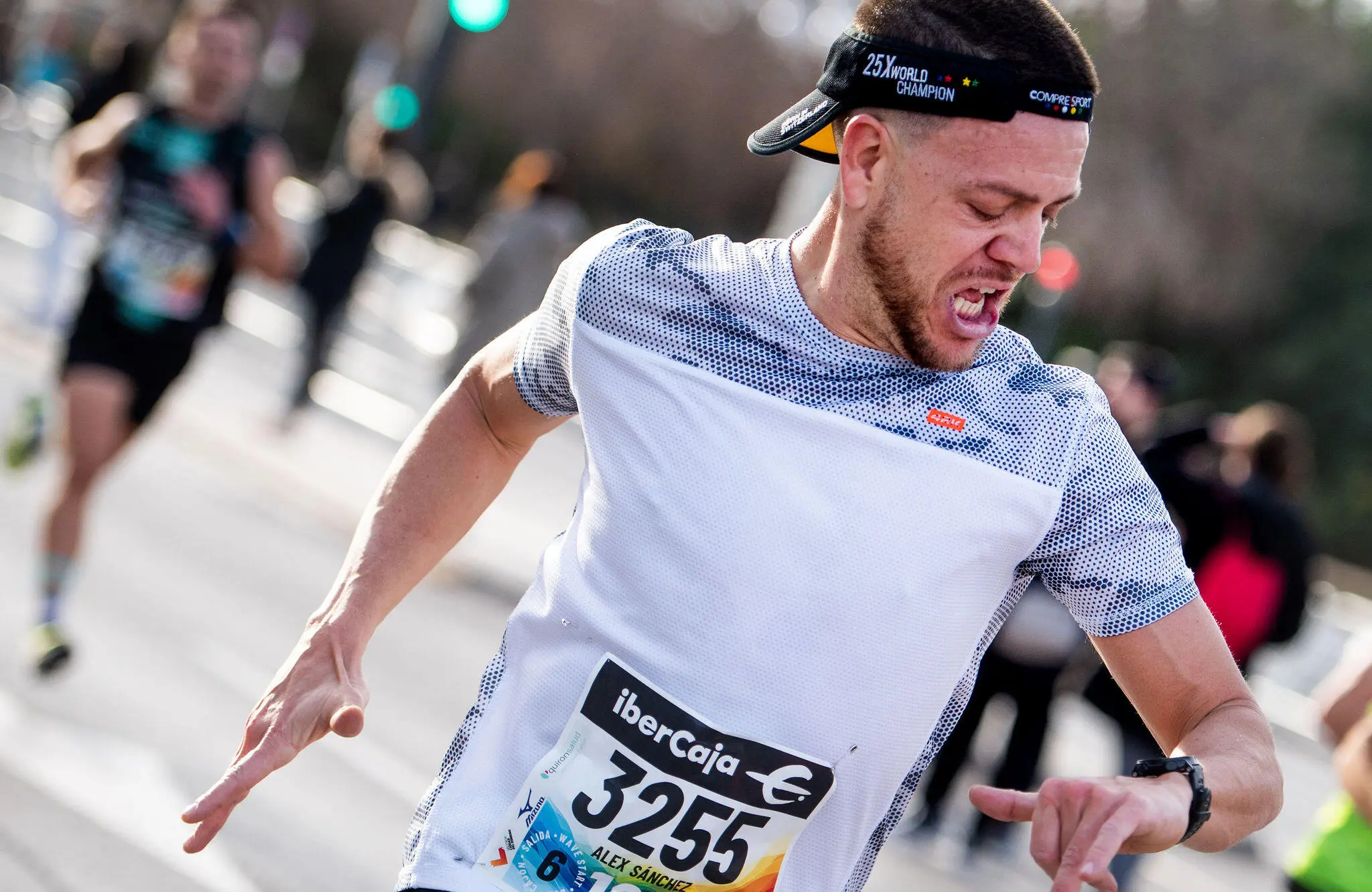
Preparing for the half marathon with running AI is no longer a futuristic idea reserved for pro athletes. Today, any runner with a GPS watch, an analysis platform and the right mindset can use artificial intelligence to plan, adjust and optimize their preparation much more precisely than with traditional methods.
The half marathon (21.097 km) is a demanding distance: it requires solid aerobic endurance, pace control, metabolic efficiency and smart fatigue management. It's not simply "double the 10K". It's a race where strategy and planning make huge differences.
In this article you'll discover:
- How AI applied to training really works.
- What data you need to prepare for the half marathon with AI effectively.
- How to structure a smart plan.
- Qué errores evitar.
- How to use predictive analysis to arrive at race day in your best form.
If you want to run your half marathon with method and not by intuition, keep reading.
What it really means to prepare for the half marathon with AI
When someone searches for preparing a half marathon with running AI, they usually want to:
- Un plan personalizado.
- Saber cuánto entrenar.
- Adjust loads without getting injured.
- Mejorar su marca.
- Optimize their prep time.
But what many don't know is that AI doesn't "create magic". What it does is:
- Analyze large volumes of data.
- Detect individual patterns.
- Adjust load based on your physiological response.
- Predict future performance.
- Reduce the margin of error in planning.
The key difference is moving from a generic plan to a system that learns from you.
Stop piling up junk miles
Connect your Strava and train smart.
You'll get an Iron Buddy email after your next workout.
What a half marathon demands physiologically
To understand how to apply AI, first we need to understand the physiological demand.
A half marathon depends mainly on:
1. Sustained aerobic capacity
The race is run at 85%–92% of VO₂max for most runners.
2. High lactate threshold
Race pace is usually very close to functional threshold.
3. Eficiencia energética
Optimizing fat use and saving glycogen is key.
4. Resistencia muscular
21 km generates cumulative neuromuscular fatigue.
5. Mid-term load management
Preparation usually lasts between 10 and 16 weeks.
Preparing the half marathon with running AI means modeling all these variables with real data.
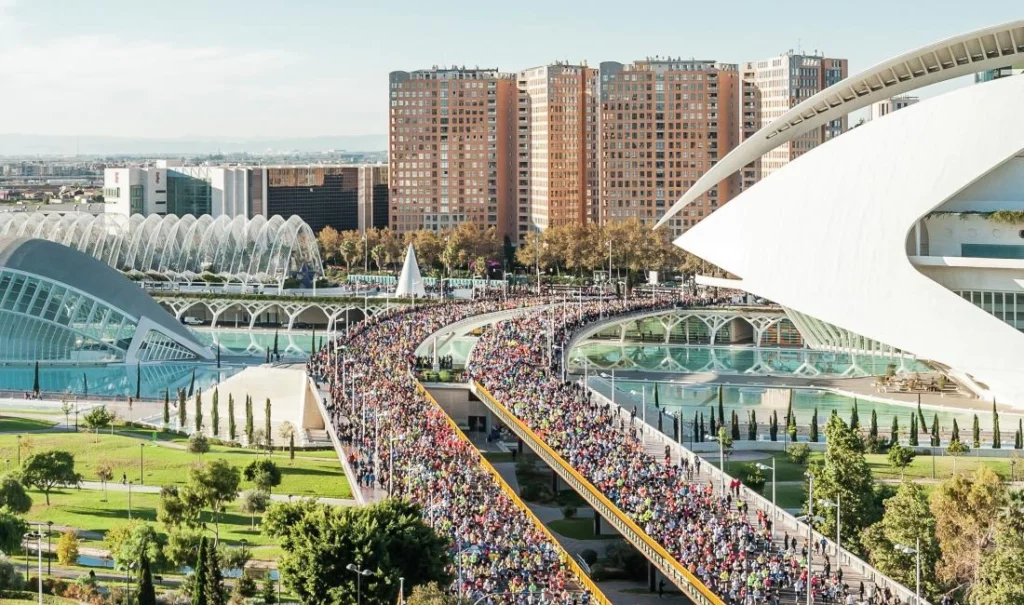
What data AI uses to prepare for a half marathon
A smart system can integrate:
🔹 Carga externa
- Kilómetros
- Ritmo
- Desnivel
- Power
- Tiempo en zonas
🔹 Carga interna
- Frecuencia cardíaca
- HRV
- RPE (subjective perception)
- Calidad del sueño
🔹 Datos históricos
- Resultados en 10K previos
- Tendencia de mejora
- Injury history
🔹 Datos biomecánicos
- Cadencia
- Ground contact time
- Oscilación vertical
The advantage of the running AI half marathon approach is that it doesn't analyze each variable in isolation — it cross-references patterns.
Por ejemplo:
- Stable pace + descending HRV + increased RPE → overload risk.
- Pace improves at the same HR → positive adaptation.
How to structure preparation with artificial intelligence
Phase 1: Aerobic build (4–6 weeks)
Objetivo:
- Gradually increase volume.
- Improve cardiovascular efficiency.
- Consolidate metabolic base.
AI can:
- Adjust weekly increase based on individual response.
- Detect excessive cardiac drift.
- Recommend additional recovery days.
Distribución típica:
- 75–80% low aerobic zone.
- Strength work 2 times per week.
- Rodaje largo progresivo.
Phase 2: Threshold development (4–5 weeks)
Here specificity begins.
Entrenamientos clave:
- Tempo runs de 20–40 min.
- Long intervals (3×3000, 4×2000).
- Blocks at half marathon pace.
La IA analiza:
- Estabilidad del ritmo.
- Heart rate evolution.
- Carga acumulada.
- Recovery between sessions.
Preparing a half marathon with running AI lets you adjust intensity in real time if fatigue is higher than expected.
Phase 3: Specificity and sharpening (2–3 weeks)
Objetivo:
- Consolidate race pace.
- Reducir volumen.
- Optimizar frescura.
Artificial intelligence can:
- Calcular taper óptimo.
- Predecir ritmo realista.
- Adjust the last week based on HRV and acute load.
Practical example: runner aiming to break 1h35
Perfil:
- Marca actual: 1h40.
- 45–55 km semanales.
- Previous 10K experience.
With the half marathon AI approach:
- The last 8 weeks are analyzed.
- Se modela carga crónica.
- Goal pace is calculated (4:30/km).
- Progressive blocks are adjusted.
Microciclo específico:
- Tuesday: 4×2000 at pace slightly above goal.
- Thursday: 30 min tempo at controlled pace.
- Sunday: 18 km long run with last 5 km at race pace.
If HRV drops for 3 consecutive days, AI automatically reduces intensity.
Common mistakes when preparing for a half marathon
1. Copiar planes estándar
Cada runner tiene:
- Different load tolerance.
- Different metabolic efficiency.
- Historial único.
2. No medir recuperación
The half marathon punishes poorly managed accumulated fatigue.
3. Excess kilometers without quality
More volume doesn't always mean more performance.
4. Ignorar la fuerza
Strength improves economy and delays muscle fatigue.
5. Not simulating race pace
The body needs to recognize the specific stress.
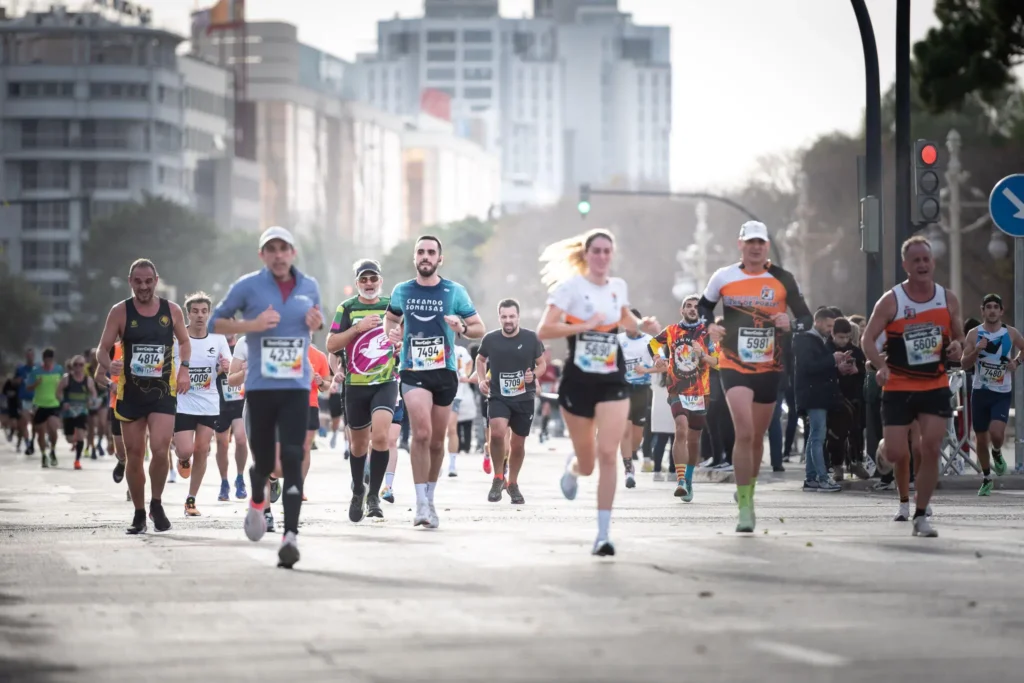
How AI improves injury prevention
Preparing with running AI reduces risk if used correctly.
La IA puede detectar:
- Incrementos bruscos >10% en carga.
- Abnormal cadence changes.
- Persistent HRV decline.
- Unperceived accumulated fatigue.
This connects directly with advanced strategies of running injury prevention, where data analysis becomes a predictive tool.
PR prediction with AI models
Predictive models use:
- Pace trend in tempo runs.
- Consistency in long runs.
- Evolución del umbral.
- Relación ritmo/FC.
With enough history, they can estimate:
- Probable race time.
- Ritmo óptimo inicial.
- Riesgo de “pájara”.
They don't replace strategy, but they reduce uncertainty.
Data-based race strategy
Para una media maratón:
- Start controlled the first 3 km.
- Hold goal pace steady through km 15.
- Assess real feel at km 16–18.
- Last 3 km: progression if you have room.
Half marathon AI prep lets you simulate scenarios before racing.
The role of load analysis
A key metric is the acute/chronic ratio:
- <0.8 → insufficient stimulus.
- 0,8–1,3 → zona óptima.
- 1,5 → riesgo elevado.
Continuous analysis lets you adjust before excessive fatigue appears.
In our Running pillar we dive deeper into how to correctly interpret these metrics so they don't become context-less numbers.
Can AI replace a coach?
No completamente.
The best scenario is hybrid:
- AI for analysis and adjustment.
- Coach for global strategy.
- Runner aware of their feel.
Technology amplifies decision-making, but doesn't replace human experience.
Conclusion: preparing a half marathon with AI is training with precision
Preparing a half marathon with AI doesn't mean blindly depending on an algorithm.
Significa:
- Medir lo que importa.
- Analizar tendencias.
- Adjust load with judgment.
- Predict performance with real data.
- Reducir incertidumbre.
The half marathon is a strategic test.
Improvisation rarely yields optimal results.
When you combine structured planning, data analysis and AI models, you reduce randomness and increase your chances of success.
The modern runner doesn't just run kilometers.
Interpreta información.
And that difference can be what takes you to crossing the finish line at your personal best.
Practical summary for half marathon AI prep
- Set a realistic goal time.
- Analyze your 8–12 week history.
- Build a solid aerobic base.
- Progressively introduce threshold blocks.
- Monitor acute/chronic load ratio.
- Monitorea HRV y sueño.
- Simulate race pace in long runs.
- Reduce volume in final taper.
- Use predictions as a guide, not absolute truth.
- Combine data with feel.
Preparing a half marathon with running AI isn't training more.
It's training smart.
Related articles
¿Quieres aplicar todo esto a tu entrenamiento? Conecta tu Strava con Iron Buddy y empieza gratis.