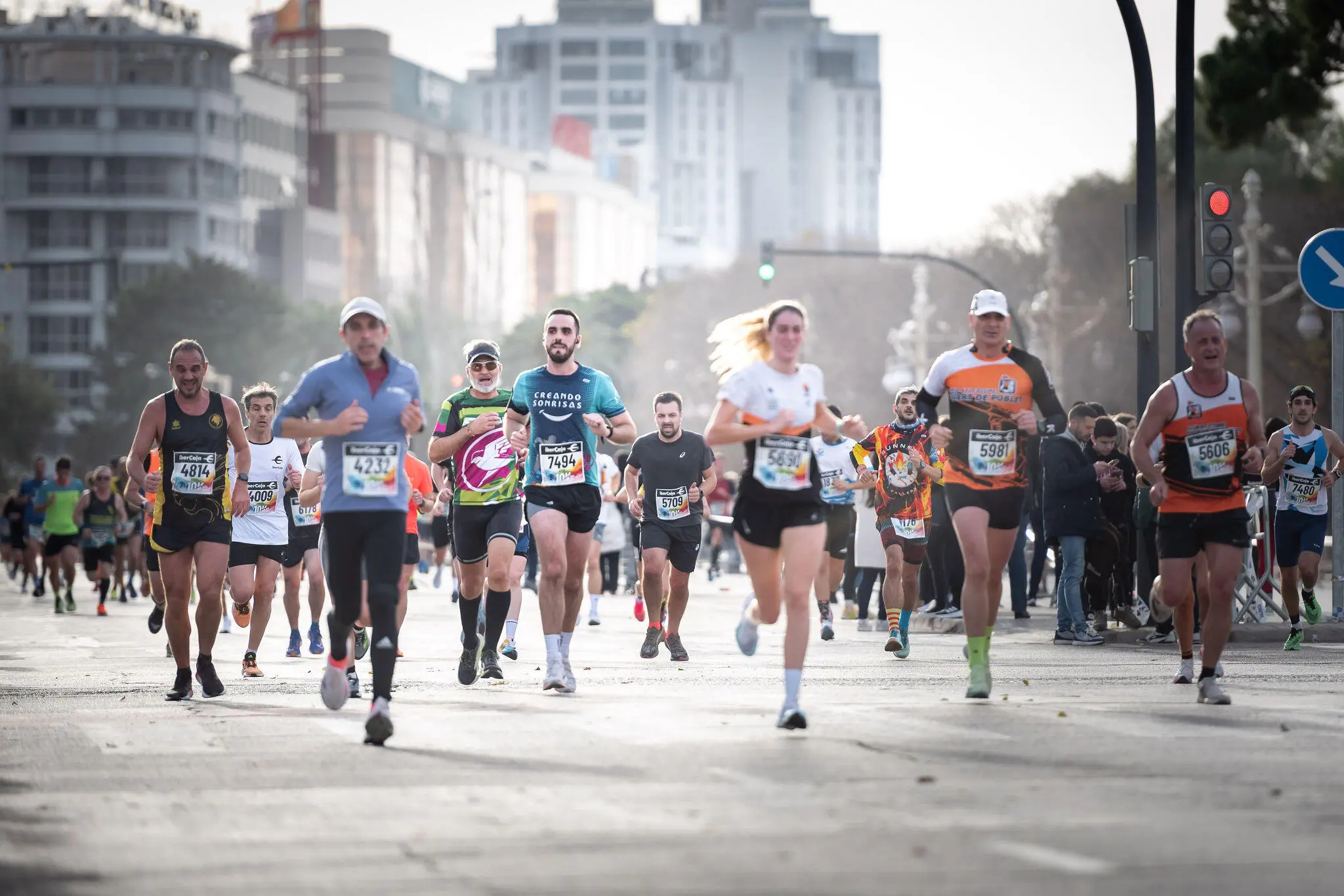
Preparing for a 10K shouldn't just be piling up kilometers and hoping everything clicks on race day. Yet that's exactly the strategy most recreational runners follow: they train "enough", do a few long runs, throw in some intervals when they remember… and cross their fingers.
The problem isn't lack of effort. It's lack of structure.
Si quieres preparar 10K running intelligently, you need more than motivation: you need data, strategic planning and a system that turns every session into a measurable investment in performance.
In this guide you'll discover:
- Which variables really determine your 10K performance.
- How to structure a data-based plan.
- Which metrics you should analyze weekly.
- How to avoid plateau and injury.
- How to apply AI and predictive analysis to optimize your prep.
If you train to actually improve — not just to finish — this article is for you.
The real intent behind "10K training"
Cuando alguien busca preparar 10k running, generalmente quiere:
- Improve their personal best.
- Tener un plan claro.
- Saber cuánto entrenar.
- Understand what kind of sessions to do.
- Evitar lesionarse.
But almost nobody explicitly searches for "analyze acute load", "optimize lactate threshold" or "model fatigue". And yet, that's exactly what determines the outcome.
The difference between finishing a 10K and racing it is in how you manage the data your training generates.
What actually determines 10K performance
A 10K is a high-demand aerobic event with a significant anaerobic contribution. It's not a long sprint or a short half marathon: it's an intermediate zone where precision matters.
Las variables clave son:
1. VO₂max
Maximum oxygen consumption capacity.
Sets the physiological ceiling.
2. Umbral de lactato
The pace you can sustain without excessive metabolic fatigue accumulation.
3. Economía de carrera
How much energy you spend to hold a given pace.
4. Fatigue resistance
Ability to sustain intensity for 35–60 minutes.
5. Gestión de carga
Balance between stimulus and recovery.
If you want to seriously prep for a 10K, your plan should hit these five variables.
How to structure 10K training
Phase 1: Aerobic base (4–6 weeks)
Objetivo:
- Improve cardiovascular efficiency.
- Increase volume without excessive fatigue.
Características:
- 70–80% of training in low aerobic zone.
- Rodajes progresivos.
- Trabajo técnico.
- Fuerza general.
Datos a controlar:
- Resting heart rate.
- Deriva cardíaca.
- Chronic load (4-week average).
Common mistake: starting too intense.
Phase 2: Threshold development (3–4 weeks)
This is where the specific work begins.
Sesiones clave:
- Tempo runs (20–30 min at threshold pace).
- Long intervals (4×2000, 5×1000).
- Runs with blocks at controlled pace.
Indicadores a analizar:
- Ritmo medio sostenido.
- Heart rate stability.
- Relative power (if using a sensor).
In this phase, preparing the 10K means starting to train at the pace you'll race.
Phase 3: Specific sharpening (2–3 weeks)
Objetivo:
- Adaptación neuromuscular.
- Race-pace tolerance.
- Ajuste de volumen.
Entrenamientos:
- Series cortas intensas.
- Paces slightly faster than goal.
- Progressive volume reduction (tapering).
Key data:
- Acute/chronic load ratio.
- Subjective freshness feel.
- Calidad del sueño.
Metrics you should analyze each week
If you want to prep your 10K with data, these are the minimum metrics:
🔹 Kilómetros semanales
But more important: trend, not isolated number.
🔹 Training load (TSS or equivalent)
Lets you quantify intensity + volume.
🔹 Ratio agudo/crónico
Ideal entre 0,8 y 1,3.
🔹 Tiempo en zona umbral
Direct indicator of specificity.
🔹 Heart rate variability (HRV)
Predicts recovery state.
🔹 Pace vs heart rate
If you run faster at the same HR → positive adaptation.

Practical example: 10K training in 12 weeks
Suppose a runner with current PR of 45:00 wanting to break 42:00.
Typical week in the specific phase
- Lunes: descanso o fuerza.
- Tuesday: 5×1000 at goal pace.
- Wednesday: easy run 8–10 km.
- Jueves: tempo 25 min.
- Saturday: progressive long run.
- Domingo: regenerativo.
Weekly volume: 45–55 km.
What matters isn't copying this structure, but adapting it to your real data.
Use our AI-based training service to prep your next race
Quiero ver los serviciosCommon mistakes when preparing a 10K
1. Always training at the same pace
Constant middle zone = plateau.
2. Ignoring recovery
Progress happens when you absorb the load.
3. Increasing kilometers too fast
Weekly increases >10% raise injury risk.
4. No medir nada
Without data, there's no objective feedback.
5. Not simulating race pace
The body needs to recognize the specific stress of the 10K.
How to apply AI to prepare for a 10K
This is where traditional planning evolves.
La IA permite:
1. Dynamic load adjustment
If it detects high fatigue → automatically reduces intensity.
2. Predicción de marca
Models based on historical progression estimate probable time.
3. Early overtraining detection
By analyzing HRV + load + sleep.
4. Personalización real
Two runners with the same PR may need different stimuli.
En nuestro pilar sobre entrenamiento con IA, we dive deeper into how these systems learn from your data and optimize each microcycle.
The key isn't for AI to train for you. It's for it to help you make less emotional, more strategic decisions.
10K training and injury prevention
A data-based plan also reduces risk.
Variables a vigilar:
- Sudden load increase.
- Progressive HRV reduction.
- Increased RPE on easy runs.
- Biomechanical changes (cadence, ground contact time).
This connects with our content on running injury prevention, where we analyze how data lets you anticipate problems before pain shows up.
Data-based race strategy
Training well isn't enough. You have to race smart.
Antes de la carrera:
- Analyze your sustainable average pace in 20–30 min sessions.
- Calculate realistic goal pace.
- Define negative split strategy (second half slightly faster).
Durante el 10K:
- Control the first 2 km (no faster than planned).
- Keep stability through km 7.
- Last 3 km: mental management + progressive pace.
10K training includes training the strategy, not improvising it.
The role of strength in preparation
Many runners neglect it.
Beneficios comprobados:
- Improves running economy.
- Reduce riesgo de lesión.
- Increases ability to sustain pace.
Frecuencia recomendada:
- 2 weekly sessions in base phase.
- 1 maintenance session in specific phase.
Signs your prep is going well
- Pace improves without proportional HR increase.
- HRV estable o ascendente.
- Sense of control in demanding sessions.
- Fast recovery after intervals.
If these indicators line up, you're on the right path.
Conclusion: preparing for a 10K is about precision
Preparing for a 10K isn't about training more.
It's about training better.
Cuando integras:
- Structured planning.
- Control de carga.
- Métricas clave.
- Evaluación objetiva.
- Artificial intelligence applied to analysis.
You turn the process into something measurable and optimizable.
The modern runner no longer competes only with legs and heart.
Compite con información.
And whoever learns to interpret their data will have a real edge on race day.
Practical summary for 10K training
- Set a concrete goal (PR and date).
- Assess your starting point with a real test.
- Build a solid aerobic base.
- Progressively introduce threshold work.
- Adjust volume based on chronic load.
- Monitor acute/chronic ratio.
- Integrate strength weekly.
- Analyze HRV and recovery.
- Simulate race pace.
- Reduce volume the last 2 weeks.
- Evaluate results and learn from the process.
Preparing a 10K with data and planning isn't more complex.
Es más inteligente.
And that difference shows on the clock.
Related articles
¿Quieres aplicar todo esto a tu entrenamiento? Conecta tu Strava con Iron Buddy y empieza gratis.